
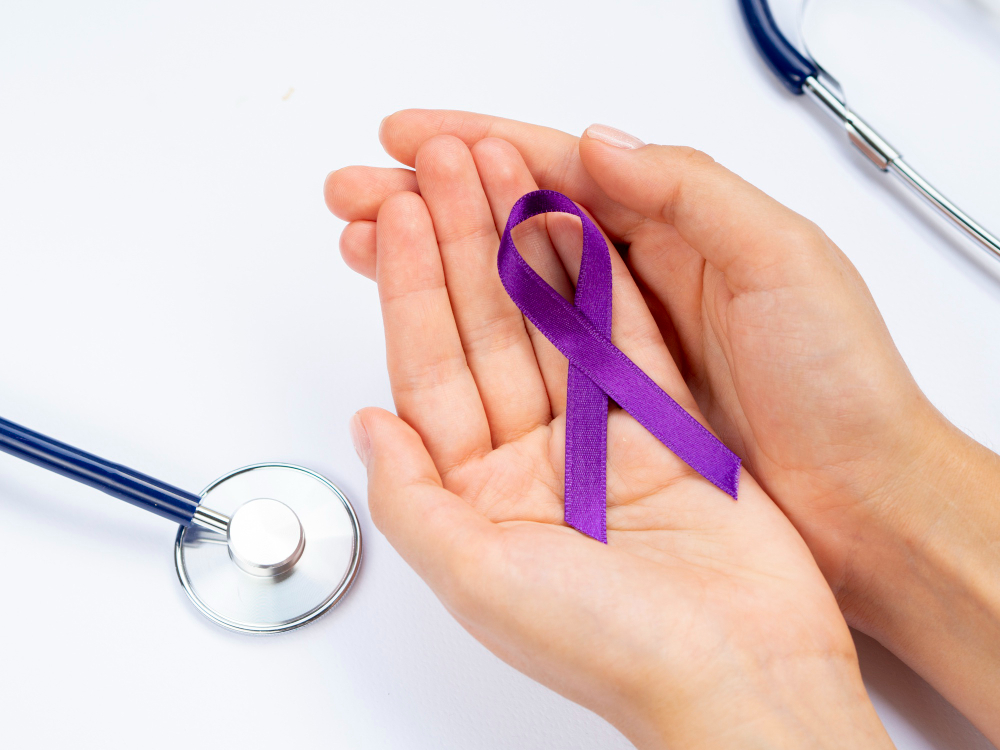
A cancer diagnosis can change everything in the space of a single appointment. One moment you are living an ordinary life; the next, you are trying to absorb words like “stage,” “biomarker”, and “treatment plan” while your mind is still catching up with the news itself.
This is the first article in a new OncoEd series that follows the patient journey step by step, starting here, at the very beginning. It does not aim to explain everything about cancer. It aims to explain enough that the weeks ahead feel a little more familiar.
What you will learn
- What a diagnosis actually tells your care team, and what it does not yet tell them
- Who is likely to be part of your care team, and what each person does
- The general shape of a treatment journey, and why yours may look different from someone else’s
What your diagnosis tells your care team
A cancer diagnosis is rarely one single fact. It is usually a combination of several pieces of information, gathered from scans, blood tests and a biopsy, that together describe three things: what type of cancer it is, where it is located, and how far it has developed. This last part is often called the “stage.”
Increasingly, your care team may also test the tumour itself for specific biological markers, sometimes called biomarkers. These tests can show whether particular treatments (for example, certain targeted therapies) are likely to work well for your specific cancer. Not every cancer type is tested this way, and not every result changes the treatment plan. Still, when it is available, this information helps your team choose the most effective option for you specifically, rather than a generic one.
It is normal for all of this to take time. Waiting for results while not yet knowing the full picture is one of the hardest parts of early diagnosis, and there is no way to make that wait shorter. What can help is knowing that this waiting period has a purpose: your team is not delaying; they are building an accurate picture so that your treatment plan fits your situation as closely as possible.
Who is likely to be part of your care team
Cancer care usually involves more people than just one doctor. Depending on your diagnosis, your care team may include:
- An oncologist, who leads and coordinates your treatment plan
- A surgeon, if your treatment includes an operation
- A radiation oncologist, if radiotherapy is part of your plan
- Specialist nurses, who are often your most regular point of contact between appointments
- A social worker or patient navigator, who can help with practical and financial questions
- Sometimes a psychologist or counsellor, for support with the emotional side of diagnosis and treatment
In many hospitals, your case will also be reviewed by a tumour board, a group of specialists from different fields who meet to discuss and agree on a treatment plan together, rather than one doctor deciding alone. You are not expected to remember every name or role straight away. Over the coming weeks, it usually becomes clear who to contact for what.
The general shape of a treatment journey
Treatment plans vary enormously between cancer types, stages and individual patients, so there is no single timeline that applies to everyone. That said, most journeys move through some version of the following stages:
- Diagnosis and staging — tests to confirm the diagnosis and understand its extent
- Treatment planning — your team decides on an approach, sometimes combining surgery, chemotherapy, radiotherapy, targeted therapy or immunotherapy
- Active treatment — the period when the planned therapies are delivered
- Monitoring and follow-up — checking how the cancer and your body are responding, and adjusting the plan if needed
Your own path may skip some of these stages, repeat others, or move at a different pace. It does not mean anything has gone wrong — it means your plan is being built around your specific situation rather than a fixed template.
However you are feeling right now, that is a normal reaction
Some people feel a need to understand every detail immediately. Others find they cannot take in more than one piece of information at a time, and that is equally natural. Some feel fear, some feel anger, some feel strangely calm, and some feel very little at all in the first days. None of these reactions is the wrong one.
What tends to help, in the early period, is often smaller than people expect: writing down questions as they come to mind so they are not lost before the next appointment, bringing someone with you when you can, and allowing yourself to take things one step at a time rather than trying to plan the entire journey on day one.
Where OncoEd fits in
This article is the first in a series that will walk through each stage of the cancer journey in plain language — from diagnosis, through active treatment and managing side effects, to life after treatment. Alongside these articles, OncoEd is building a digital platform, a mobile app and hospital kiosks so that this kind of information is easy to find again whenever you need it, not just once.
References & Follow-up
- European Society for Medical Oncology (ESMO) — Patient Guides: esmo.org/for-patients
- National Cancer Institute — Understanding Cancer Diagnosis: cancer.gov/about-cancer/diagnosis-staging
- World Health Organization — Cancer factsheet: who.int/news-room/fact-sheets/detail/cancer
All OncoEd materials are educational. They do not replace advice from a patient’s own medical team.
Follow the project
Website: oncoed.org
LinkedIn: OncoEd

Funded by the European Union, Erasmus+ Cooperation Partnership in Adult Education. KA220-ADU-BF389AFE OncoED: Digital Health Literacy for Cancer Patients Across Europe · 2025–2027
